

Photography still holds and guides us; even after nearly 200 years, it is an incredible painting tool. So, when I read that Bleckner was using Cy Twombly's photographs of flowers as source material for his new paintings, I made time to see the exhibit at Petzel.
Masterful. Bleckner's surfaces are always lush. The oil paint is laid thick and worked softly, dark to light. Then, when the image takes hold, he drags the soft brush across the surface to blur our understanding and confound our expectations. I suppose you could call on Richter here. Gerhard used this blurring technique to mimic newsprint pictures, which allowed the image to exist at a distance. It was a clever way around Modernism's disdain for illusion and American Pop artists' mimicking of culture. The "blur" brought back the idea that painterly illusions could critique contemporary experience through the long and vibrant history of European painting.
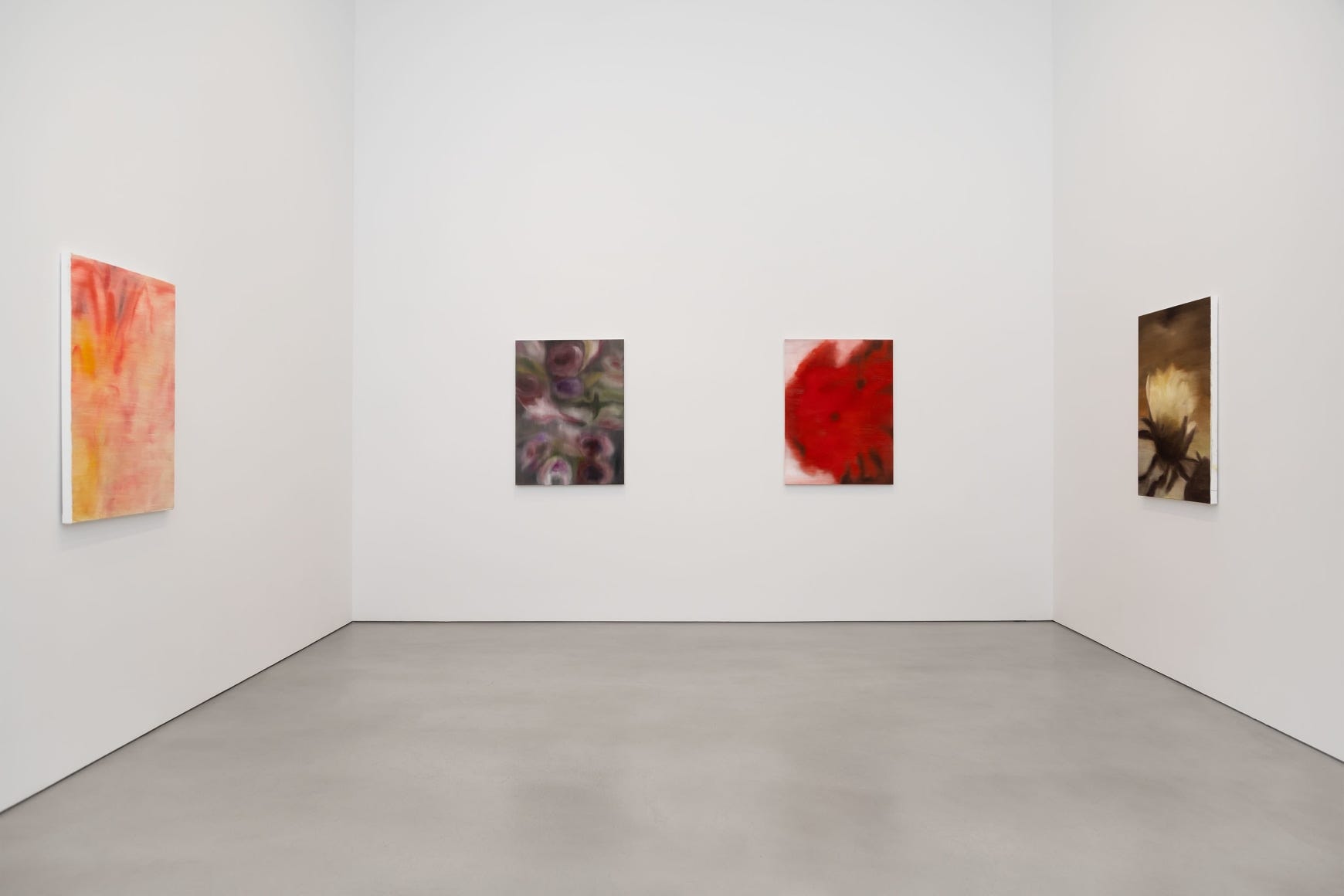
Bleckner uses this technique a bit differently. He's not mimicking print media or trying to create a distancing device. Ross wants his vision to be more oblique and off-center. He uses the painted blur to make Twombly's nostalgic ephemeral images more substantial. Ross confronts the image and paints a vibrant portrait of the photograph. Rather than illustrate Twombly's moment of satori, Ross acknowledges his feelings of living with and looking at the photo. The surface builds and comes to life. The color fills and overflows. The lens image transforms into a painting, giving us Bleckner's full-bodied portrait of Cy rather than a copy of a photograph of a red flower.
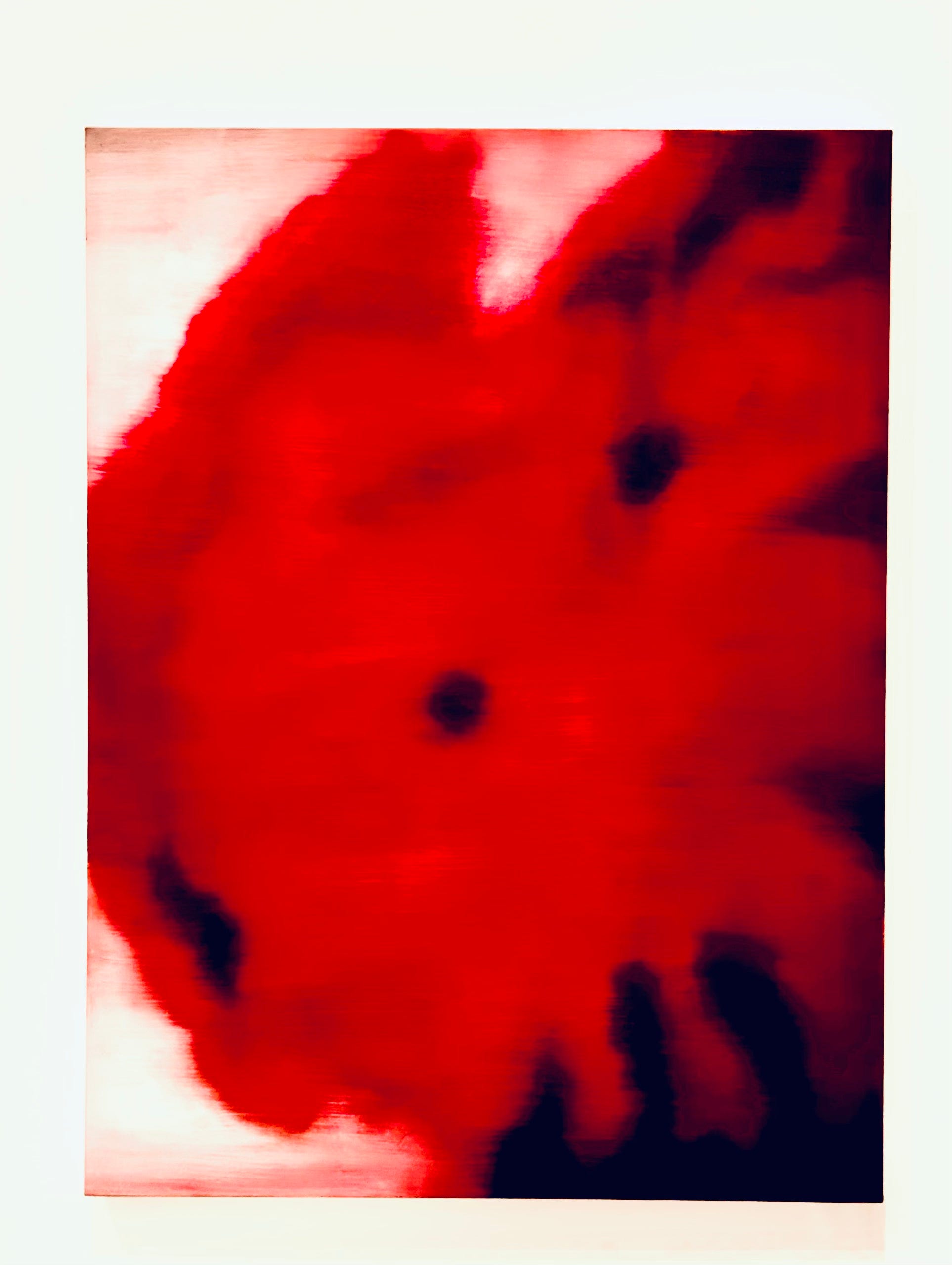
My favorite painting in the show was the red tour de force based on Twombly's photo Flowers II, Gaeta, 2005. (This image inspired many of Cy's paintings.) Ross practically electrifies the picture, layering and softening the edges, turning that red into a forceful and insistent thing-on-the-wall. The painting absolutely glows. In Ross' hands, Cy's image of the flower becomes as authentic a visual experience as Caravaggio's blood-red curtains and chiaroscuro blackness. I guess Italy will always have its way with painters, even the abstract ones.
These paintings are Romantic. Tantalizing. Bittersweet. Temporal and full of life. And they are among some of the best things Ross has done.